
Dr. Jessen has proudly served as director of audiology at Columbine Hearing Care since 2002. In 2017 she purchased the practice and has since expanded to 2 locations – Littleton and Arvada. In 2026 she re-branded the business to New Leaf Hearing Care. She is passionate about following best practices to ensure the best treatment outcomes for every patient, and she treats all of her patients like family. She purposefully keeps her practice small so that every one of her patients receives the personalized and professional care that they deserve.
Dr. Jessen earned her Master of Science in Audiology from Arizona State University and her Doctorate in Audiology from the Arizona School of Health Sciences.
Dr. Jessen is certified by the American Speech-Language-Hearing Association (ASHA) and holds a current Colorado Audiologist and Hearing Aid Provider license. She is a Past-President of the Colorado Academy of Audiology, and a member of the Academy of Rehabilitative Audiologists, the Entheos Audiology Cooperative, and the Hearing Loss Association of America. Dr. Jessen is passionate about making hearing healthcare accessible to all and is a founding member of Hearing the Call – Colorado, a non-profit organization that provides hearing aids and hearing healthcare to under-served people in her local Colorado community.
Dr. Jessen is a proud Colorado native and an avid dog lover. Along with her own 4 dogs, Dr. Jessen and her family have fostered countless homeless pups. She lives in Centennial with her husband, Ben, and has 2 grown sons, Caleb and Brody.
Excess ear wax can cause more than muffled hearing. It may also trigger symptoms like tinnitus and vertigo. When wax blocks the ear canal, it can interfere with sound transmission and balance signals, sometimes leading
Earmolds are custom-fit devices positioned into the ear canal and the outer part of the ear. Earmolds have many different functions. One function is to help people with hearing loss. They connect to behind-the-ear (BTE)
Hearing aids come in several shapes and sizes. There are two types of hearing aids that sit on top of, or slightly behind, the ear. These are behind the ear (BTE) and receiver in the
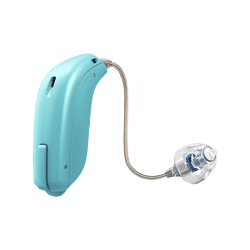
There are two basic types of hearing aid batteries: rechargeable and disposable. While the majority of behind-the-ear and receiver-in-the-ear hearing aids have switched to rechargeable batteries, there are still many hearing aids that use disposable

Aural rehabilitation is a broad term that encompasses all of the treatment that can be provided to help people overcome the challenges related to hearing loss. It includes amplification (hearing aids, cochlear implants, assistive devices),
Anytime you try something new, there is an adjustment period as you get used to the new situation. Getting hearing aids is no different. It takes time to get used to the physical feeling of
When your ears are feeling stopped-up or clogged, what you are actually experiencing is a blockage of your eustachian tubes. Your eustachian tubes run between your middle ear and the back of your nose, and
Earwax exists to help clean, lubricate, and protect your ear. It is usually soft and oily, a consistency that helps lubricate and trap unwanted debris. Hard, dry earwax, on the other hand, can sometimes cause
High frequency hearing loss is one of the most common types of hearing loss. The most common symptom of high frequency hearing loss is feeling like people are mumbling when they speak. Millions of people
Selective hearing is the ability to listen to a single speaker while in a crowded or loud environment. You have probably heard the phrase in a joking manner referring to a person who seems to